If you think halal is just about how meat is killed, you are missing most of the picture. For 1.9 billion Muslims, halal governs every item that goes into their shopping cart. The word itself means "permissible" in Arabic. Its opposite, haram, means forbidden. This is not a dietary preference. It is a religious requirement that applies to snacks, sauces, candy, and bread just as much as it applies to chicken or beef.
The challenge is that most grocery stores in Canada and the US do not label everyday products as halal. So the question becomes less about finding a halal sticker and more about figuring out whether the ingredients inside the package meet the standard. This guide covers what actually makes food halal, which ingredients cause problems, and how to check products when you are standing in the aisle.
The Core Idea in 30 Seconds
Halal food must meet three basic conditions. It cannot contain any prohibited substances. It must be prepared and stored in a way that keeps it clean and free from contamination with haram items. And any meat must come from an animal slaughtered according to Islamic requirements, which includes saying God's name and making a swift, humane cut.
There is also the concept of tayyib. This means the food should be pure, wholesome, and good. Halal is not just about technical compliance. It includes ethical and health considerations too.
What Makes Food Haram
These items are clearly off limits. Pork and anything derived from it, including lard, gelatin, and enzymes. Alcohol and intoxicants, which includes ethanol used as a carrier in flavorings. Blood and blood products. Meat from carnivorous animals with fangs or talons. Meat from permissible animals that was not slaughtered properly. And any food that gets contaminated with the above during processing, storage, or transport.
Why Packaged Food Gets Complicated
This is where most people get stuck. A bag of chips or a protein bar does not contain obvious haram items like pork chops. But it might contain ingredients that come from haram sources. The problem is that labels in Canada and the US do not always declare the source of every sub-ingredient.
Enzymes might be microbial and halal, or animal-derived and potentially haram. Natural flavors might include alcohol-based carriers. Mono- and diglycerides might come from plant oil or animal fat. The label tells you what is in the food, but not always where it came from. This is why reading the ingredient list is often not enough.
Ingredients That Need Extra Checking
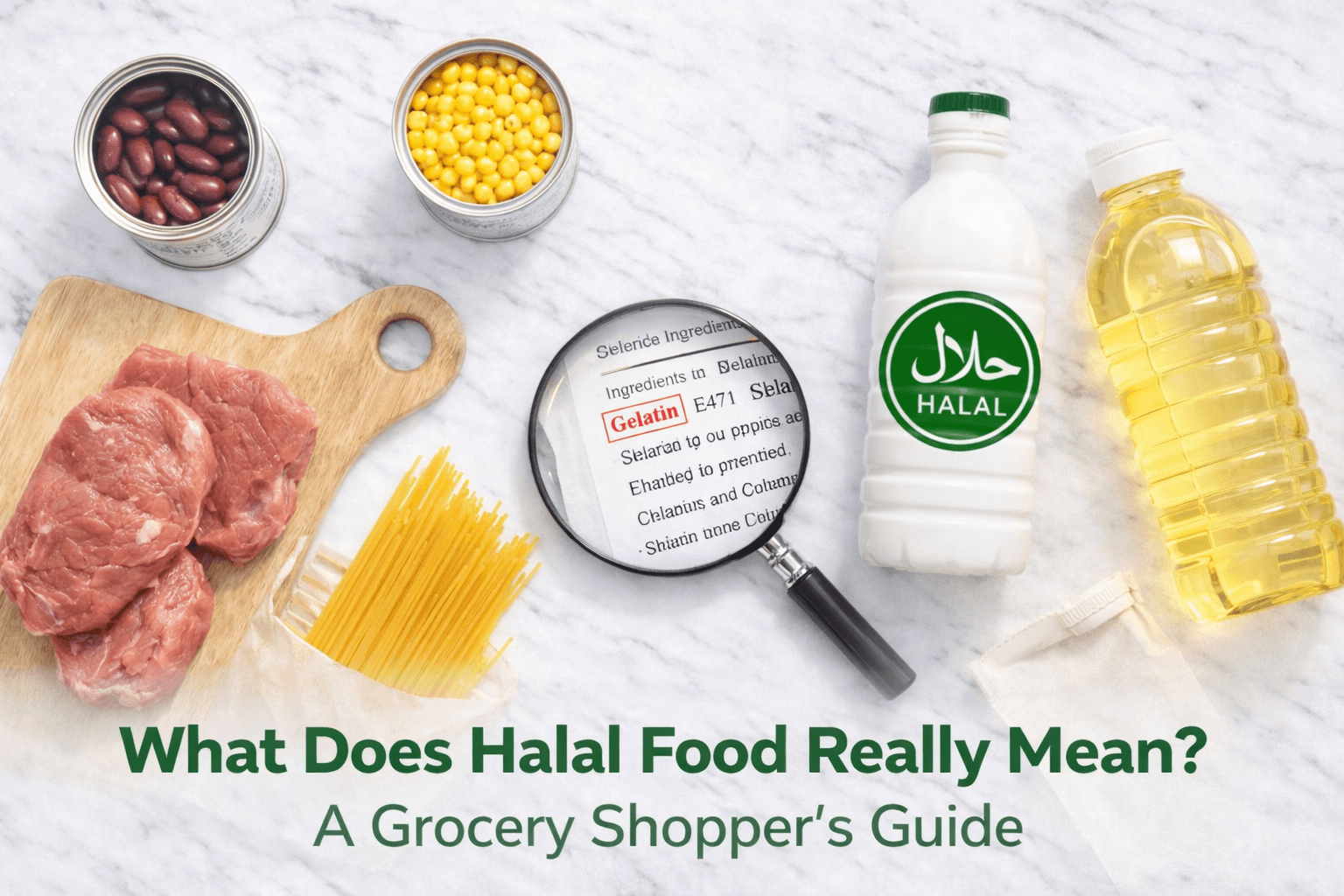
Gelatin shows up in candy, marshmallows, yogurt, and gummies. It is often pork-derived. It can also come from cattle, but that is only halal if the cattle were slaughtered properly, or from fish. Mono- and diglycerides appear in bread, baked goods, margarine, and ice cream. They are emulsifiers that can be plant or animal-based.
Enzymes like rennet, lipase, and protease are used in cheese, dairy, and bread. They can be microbial, plant, or animal-derived. If they come from animals, those animals need to have been slaughtered properly. Natural flavors is a catch-all term that appears in almost everything. It might include alcohol-based carriers or animal-derived components.
Vanilla extract contains ethanol as a solvent. Some halal standards permit it, others do not. Whey and whey powder show up in protein bars, snacks, and baked goods. They are halal if the rennet used to make the cheese was microbial. If animal rennet was used, the whey is questionable. L-cysteine is an amino acid sometimes derived from human hair or duck feathers, used in bread and bagels. Carmine or cochineal is a red colorant made from insects. Some scholars consider insects haram. It appears in yogurt, candy, beverages, and cosmetics.
The pattern is simple. If the label says what the ingredient is but not where it comes from, you need to verify further.
Certified vs Compatible
These are two very different levels of confidence. Halal certified means a recognized body has audited the product. In Canada, look for the Halal Monitoring Authority, ISNA, or IFANCA. In the US, IFANCA is common. In Malaysia, JAKIM sets the standard. These organizations check the ingredients, the supply chain, and the manufacturing process. The product carries their logo. This is the highest level of assurance you can get from a label.
Halal compatible means the ingredient list appears to contain no haram items based on what is disclosed. But no certifying body has verified the sourcing of ambiguous ingredients. No one has audited the factory for cross-contamination. Most products in mainstream grocery stores fall into this category. They are not labeled halal, but many are permissible based on their ingredients. The question is how much certainty you need.
Different Standards for Different People
Not all Muslims follow the same interpretation of halal law. This is normal. Islamic jurisprudence has always had legitimate differences of opinion.
The strict approach requires zabiha certification for all meat. It avoids any ingredient with ambiguous animal origin. It treats alcohol in any amount as haram, including vanilla extract. This aligns with many Hanafi and conservative interpretations.
The balanced approach requires halal meat but is more lenient on trace amounts of alcohol in flavoring, such as what occurs naturally in fermented foods. It accepts microbial enzymes. This is common among many North American Muslim households.
The Southeast Asian approach follows standards like JAKIM in Malaysia or MUI in Indonesia. These have specific rulings on food-grade ethanol and certain gelatin sources that may differ from Middle Eastern or South Asian positions.
None of these is more correct than the others. They represent different scholarly traditions. What matters is picking a standard and sticking to it consistently.
How to Check a Product in the Store
First, look for a certification logo from a recognized body. This is the strongest signal you can get.
Second, read the ingredient list. Look for clearly haram items like pork gelatin, lard, or alcohol. Also look for ambiguous ingredients like enzymes, natural flavors, and mono-diglycerides.
Third, check the "Contains" allergen statement. This can sometimes reveal animal-derived ingredients indirectly. If a product with whey says "Contains: milk," you know dairy is present, which raises questions about what kind of rennet was used.
Fourth, when you are unsure, use a halal food scanner. These tools can flag questionable ingredients, explain why they are questionable, and give you a confidence score based on your chosen standard.
Frequently Asked Questions
What does halal food mean?
It means food that is permissible under Islamic dietary law. It must be free from prohibited substances like pork, alcohol, blood, and improperly slaughtered meat. It should be prepared in a clean, uncontaminated manner.
Is all seafood halal?
Most scholars consider fish with scales to be halal. Opinions differ on shellfish. The Hanafi school generally considers shrimp, crab, and lobster to be disliked or forbidden. The Shafi'i, Maliki, and Hanbali schools permit all seafood.
Is kosher food automatically halal?
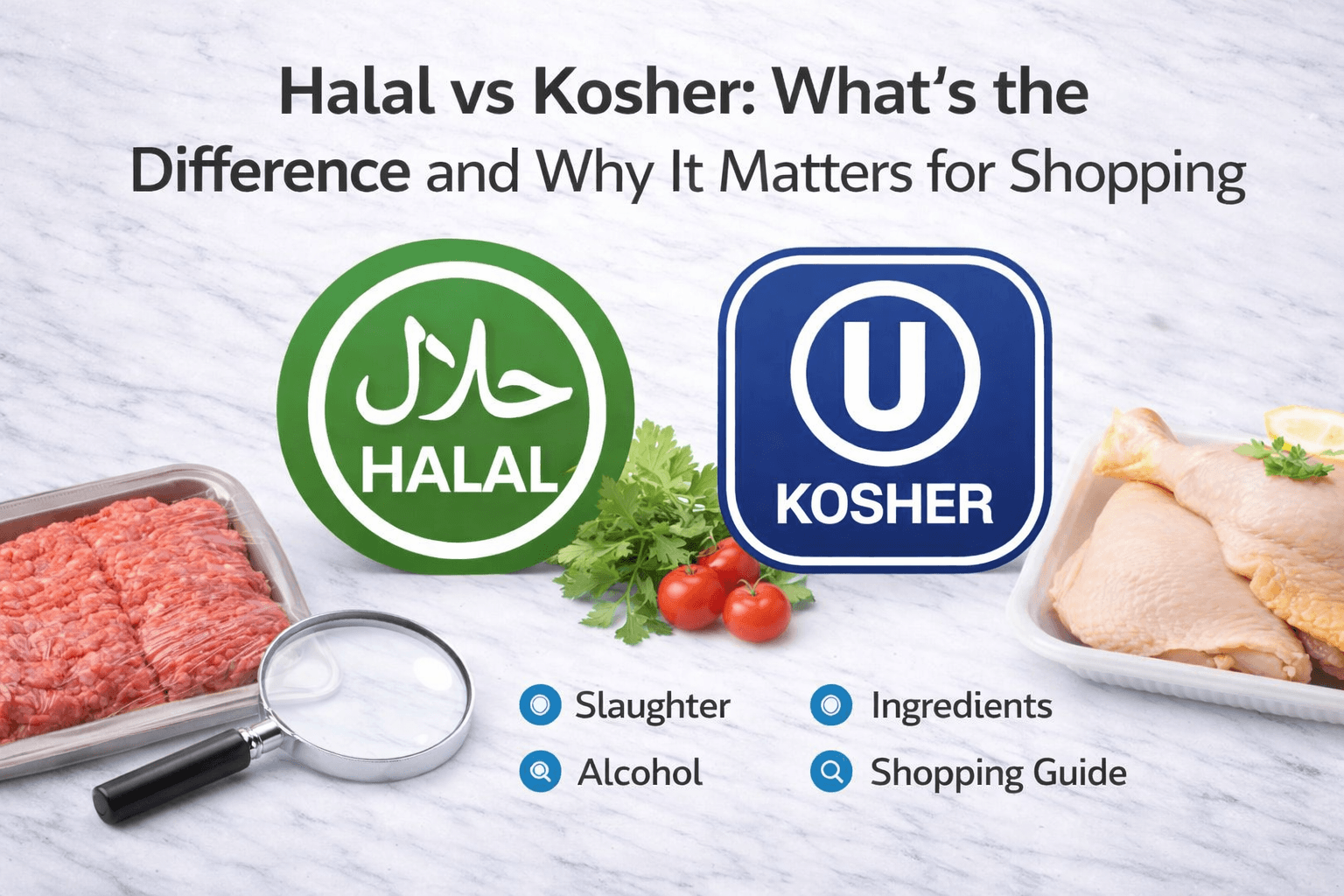
No. Both prohibit pork and require specific slaughter methods. But kosher permits alcohol and does not require invoking God's name at slaughter in the same way. Some kosher products may be halal-compatible based on ingredients, but kosher certification alone does not guarantee halal compliance.
What does halal certified mean on a label?
It means a recognized certifying body has audited the product's ingredients, sourcing, and manufacturing process and confirmed compliance with halal standards. Look for the certifier's name or logo, not just the word "halal" printed by the manufacturer.
How is halal meat killed?
The animal must be alive and healthy. The slaughterer invokes God's name. A swift cut severs the throat, windpipe, and blood vessels to ensure rapid blood drainage. The goal is to minimize suffering. Some certifiers permit stunning before slaughter, others prohibit it.
Why do Muslims eat halal?
It is a religious obligation rooted in the Quran and the teachings of the Prophet Muhammad. It encompasses obedience to God and a concern for what is pure, wholesome, and ethically sourced. For many Muslims, eating halal is an act of worship and mindfulness in daily life.