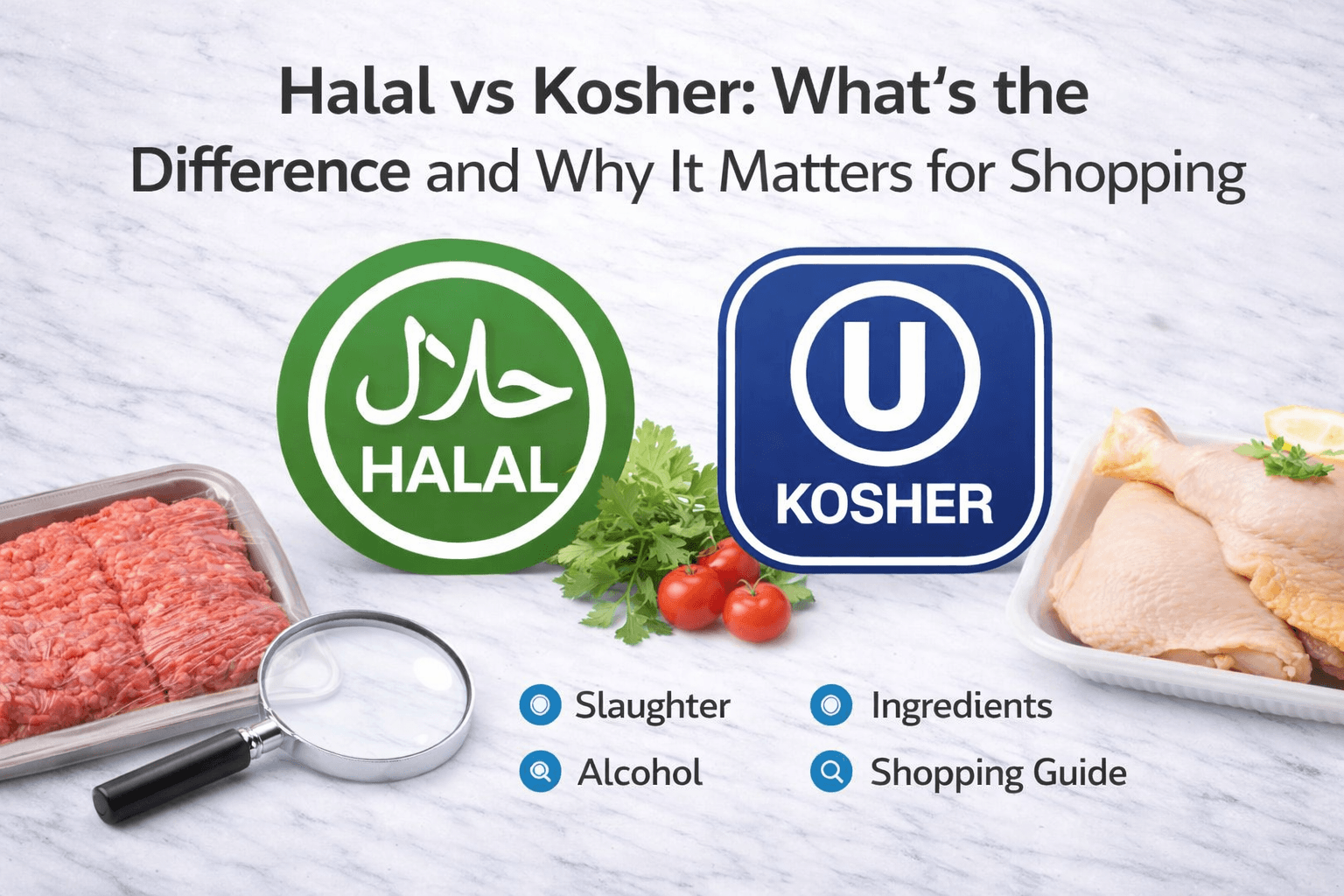
Halal and kosher are religious dietary systems rooted in Islamic and Jewish law, respectively. They share several principles: both prohibit pork, both require specific slaughter methods, and both aim to ensure food is clean and prepared with religious intention.
However, they are not interchangeable. The overlap is real, but the differences are meaningful—especially when you're navigating grocery aisles where one certification might be common and the other is rare.
Shared Roots: What Halal and Kosher Have in Common
Before diving into the differences, it's worth noting where these systems align:
No Pork: Both strictly prohibit pork and its derivatives.
Specific Slaughter: Both require animals to be slaughtered by a trained practitioner with a sharp knife to minimize suffering.
Cleanliness: Both emphasize high standards of hygiene in food preparation.
Religious Certification: Both rely on third-party verification, indicated by a halal logo or kosher symbol (like OU, OK, or COR) on packaging.
Key Differences Explained
Slaughter Method: While both require a swift cut, the invocation differs. In halal (zabiha), the name of Allah must be pronounced over the animal. In kosher (shechita), a blessing is recited, but the technical execution—monitored by a certified shochet—is the primary focus.
Alcohol: This is one of the sharpest divides. Halal law prohibits alcohol as an ingredient (including vanilla extract or wine vinegar in many cases). Kosher law permits alcohol, and wine is even central to many Jewish rituals.
Dairy and Meat: Kosher law strictly prohibits mixing dairy and meat in the same meal or even using the same utensils. Halal law allows them together, provided both are from halal sources.
Seafood: Kosher law permits only fish with fins and scales—shellfish is never kosher. Halal law generally permits all fish, though views on shellfish (shrimp, lobster) vary between different Islamic schools of thought.
Can Muslims Eat Kosher Food?
The short answer: Sometimes, but with caution. Kosher certification is a helpful signal (guaranteeing no pork), but it isn't a halal guarantee.
Alcohol: A kosher product may contain wine or wine vinegar, making it haram.
Gelatin/Enzymes: Kosher gelatin may come from animals that were not slaughtered according to zabiha standards.
Safest Approach: Use a tool like Nutika to scan kosher products; it will specifically flag alcohol or animal-derived ingredients that don't meet your chosen halal standard.
What This Means at the Grocery Store
If you're a halal shopper in a store with mostly kosher options, here is your cheat sheet:
Kosher Pareve: These are neutral products (no meat or dairy) and are the most likely to be halal-compatible—but still check for alcohol.
Kosher Dairy: Likely compatible if the rennet is microbial, but worth verifying.
Kosher Meat: This is not considered halal by the majority of scholars unless separately verified.
Frequently Asked Questions
What is the main difference between halal and kosher?
The biggest practical differences for shoppers are the prohibition of alcohol in halal and the strict separation of dairy and meat in kosher.
Is kosher food automatically halal?
No. While it guarantees no pork, it doesn't account for alcohol as an ingredient or the specific invocation required during halal slaughter.
Why do some Muslims buy kosher products?
In areas where halal-certified food is scarce, kosher pareve products provide a high baseline of confidence that there are no pork or cross-contamination issues.
Can a food scanner differentiate between them?
Yes. Modern tools like Nutika allow you to set your specific dietary standard, scanning the ingredient list for both religious compatibility and safety signals.