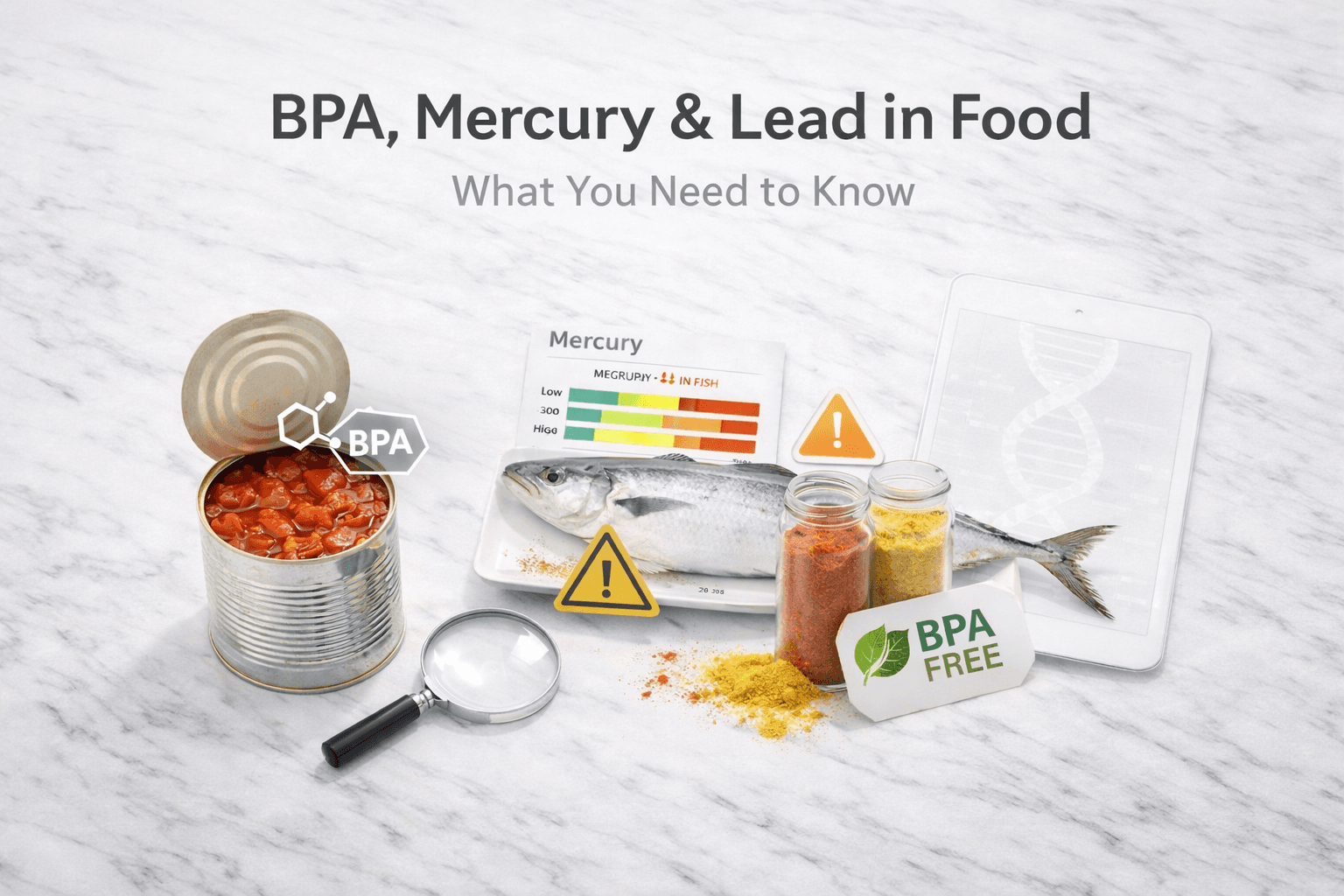
Three contaminants show up more often in food safety conversations than almost anything else: BPA in canned goods, mercury in fish, and lead in spices and baby food. All three have real evidence behind the concerns. None of them appear on a standard food label.
This guide covers what the science says about each, which foods carry higher risk, and what you can realistically do at the grocery store and at home to protect your family.
Why These Three Contaminants Matter
These aren't fringe concerns. They're the subjects of active health advisories and major investigative reporting. BPA (bisphenol A) is an industrial chemical used in can linings that can leach into food. Mercury accumulates in fish through the environment, and Lead can be found in everything from imported spices to baby food.
The unique challenge is that these aren't "ingredients"—they are environmental or manufacturing contaminants. This means the label won’t tell you whether they’re present directly, but it can tell you whether the product type is in a higher-risk category.
BPA — The Canned Food Question
Bisphenol A (BPA) is used in epoxy resins to prevent can corrosion. However, it is an endocrine disruptor that can interfere with hormone systems. While the FDA currently considers it safe at dietary levels, agencies like Health Canada have taken a more cautious route by banning it in baby bottles.
The shift away from BPA is happening, but it’s incomplete. Acidic foods like tomatoes are at the highest risk for leaching. When possible, choose fresh or frozen versions of these products. If you use cans, look for "BPA-free" labels—they aren't a perfect guarantee, but they indicate a safer manufacturing intent.
Mercury — The Fish Species Guide
Mercury enters our water through pollution and natural sources, eventually accumulating in fish tissue. Because this is a biological process, mercury levels vary by species, not by brand. A predator fish like a shark or swordfish will always have higher levels than a smaller fish like a sardine.
The general rule is: the larger and longer-lived the fish, the more mercury it carries. For pregnant women and children, the "Best Choices" include salmon, sardines, and canned light tuna (skipjack). "Good Choices" like albacore tuna should be limited. By rotating your species and sticking to smaller fish, you can enjoy the benefits of seafood without the toxic risk.
Lead — The Hidden Risk
Lead contamination often comes from soil or older manufacturing equipment. It has been a major headline in recent years due to its presence in baby food and certain ground spices like turmeric and cinnamon. Unlike other toxins, there is no known safe blood lead level for children.
To reduce risk, buy spices from reputable brands that perform third-party heavy metal testing. For baby food, prioritize variety; a rotating diet ensures that no single source of low-level contamination can accumulate in a child's system. Washing and peeling produce can also help remove surface lead from soil.
What Labels Can and Can’t Tell You
This is the honest limitation: food labels disclose ingredients, not contamination levels. You will never see "mercury: 0.3 ppm" on a tuna can. However, the label provides the clues you need: the species of fish, the type of packaging, and any voluntary "BPA-free" claims.
By understanding these signals, you can bridge the information gap. Nutika’s Toxicology Radar is designed to do exactly this—it interprets the label signals to flag product-category risks automatically, saving you from having to be a toxicologist just to buy groceries.
Frequently Asked Questions
Is BPA in canned food dangerous?
The FDA maintains it is safe at current levels, but it is an endocrine disruptor. Choosing BPA-free cans and avoiding heating food directly in the can are simple ways to reduce your exposure.
Which fish have the most mercury?
Large predatory fish like shark, swordfish, king mackerel, and bigeye tuna have the highest levels. Salmon, sardines, and shrimp are among the lowest.
Is there lead in baby food?
Recent investigations have found detectable levels in some brands. The FDA is working on the "Closer to Zero" initiative to reduce this. Offering a wide variety of foods is the best way to minimize cumulative exposure for infants.
What does BPA-free mean?
It means the product was made without intentionally adding BPA. However, it doesn't always guarantee the absence of similar bisphenols (like BPS). It is a better choice, but still part of a larger conversation about packaging safety.
How can I check if my food has toxins?
Since they aren't listed as ingredients, you have to look for category signals. Use a tool like Nutika’s Toxicology Radar to scan labels for high-risk species or packaging types and get instant safety guidance.