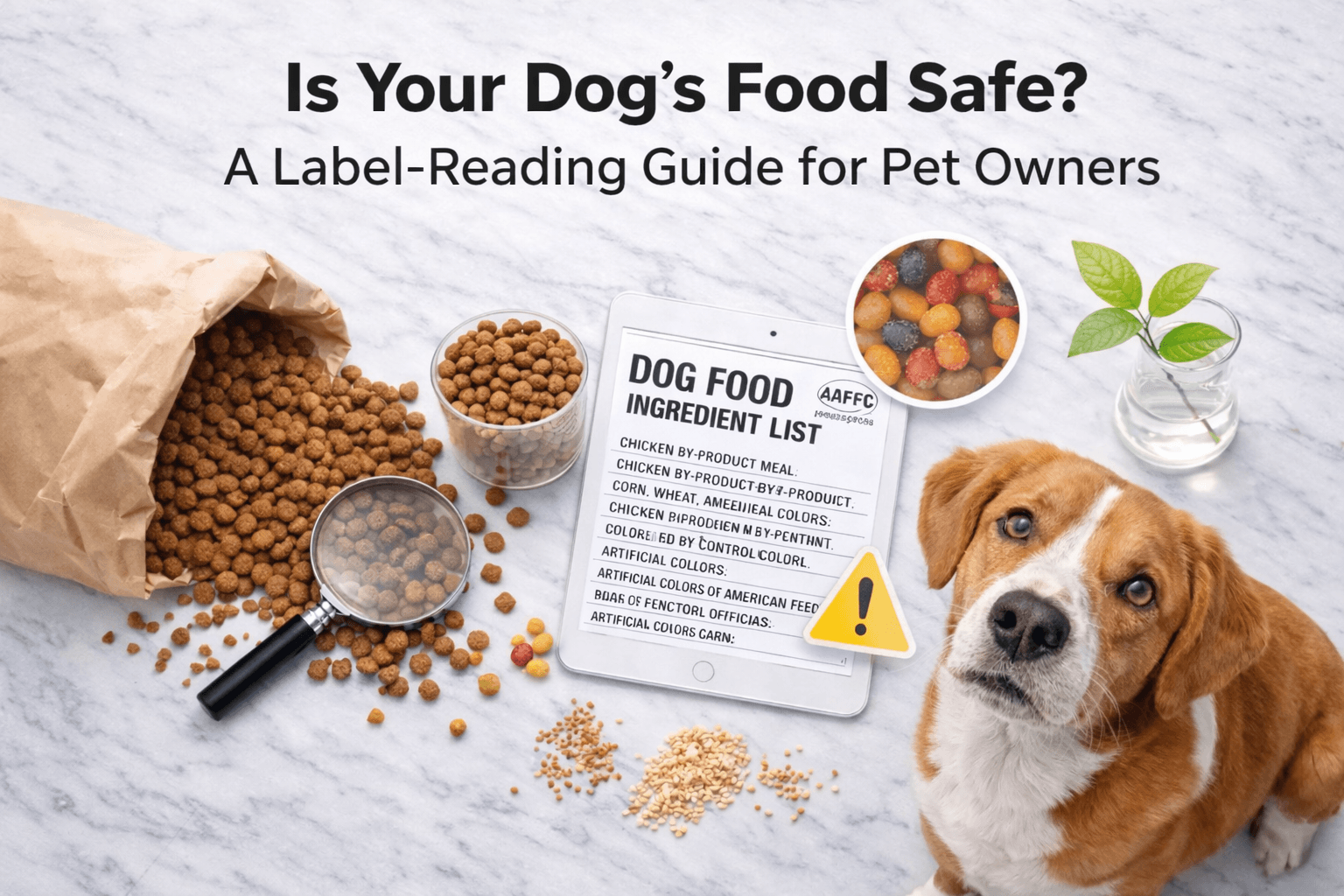
You wouldn't feed your family without checking the label. Your dog deserves the same attention — but pet food labels follow different rules, use different terminology, and carry different risks than human food labels. Most of us trust the marketing on the front of the bag, but the real story is always on the back.
This guide covers how to read a pet food label, what the AAFCO statement means, which ingredients are actually concerning (and which are just misunderstood), and how to navigate the grain-free debate without panic. By the end, you'll be able to spot the "meat weight illusion" and identify hidden additives in seconds.
Why Pet Food Labels Are Harder to Read Than Human Food Labels
Pet food in the US and Canada is regulated differently from human food. The FDA oversees pet food safety, but ingredient definitions and labeling standards are set by AAFCO (the Association of American Feed Control Officials). While AAFCO isn't a regulatory agency, its guidelines are the foundation of pet food law.
The biggest hurdles for owners are the lack of a familiar "Nutrition Facts" panel and the use of loose marketing terms like "premium" or "natural" that have little regulatory weight. Unlike human food, pet food uses a "Guaranteed Analysis" that lists minimums and maximums rather than exact amounts. This makes the ingredient list and the AAFCO statement your two most reliable sources of truth.
The AAFCO Statement: What "Complete and Balanced" Actually Means
Every commercial pet food should carry an AAFCO nutritional adequacy statement. This is the small-print line that is often overlooked but contains the most important information on the package. It confirms whether the food is a complete diet or just a supplement.
"Complete and balanced" means the food contains all required nutrients in the right proportions for a specific life stage. If you see "feeding tests substantiate," it means the food was actually fed to dogs in a trial — the gold standard. If it says "formulated to meet," it was designed against a checklist but hasn't been trial-tested. Always check the life stage; a "puppy" formula has different nutrient levels than an "adult maintenance" one.
How to Read the Ingredient List
Like human food, pet food ingredients are listed in descending order by weight before processing. This leads to the "fresh meat weight illusion." A label might list "Chicken" first, but fresh chicken is 70% water. Once cooked, that chicken might actually provide less protein than the "chicken meal" listed second.
Look for named protein sources like "lamb meal" or "salmon" rather than vague terms like "meat meal" or "animal fat." Transparency is key — if the manufacturer won't name the animal, you should question the quality. Also, watch for long lists of synthetic vitamins; they often indicate that the base ingredients were so heavily processed that the natural nutrients were stripped away.
The By-Products Question: Are They Actually Bad?
By-products have a bad reputation, but it's largely a marketing myth. AAFCO defines poultry by-products as clean parts of the carcass like hearts, livers, and kidneys. In the wild, these are the parts canines eat first because they are nutrient-dense.
The problem isn't the by-products themselves, but the lack of specificity. "Chicken by-products" are generally fine and provide essential nutrients. "Meat by-products" are more concerning because you don't know which animals they came from. If you want full traceability, stick to named sources, but don't fear by-products just because of the name.
The Grain-Free / DCM Concern: What We Know and Don't Know
In 2018, the FDA began investigating a potential link between certain grain-free diets—specifically those high in peas, lentils, and chickpeas—and canine dilated cardiomyopathy (DCM), a serious heart condition. This has caused significant worry for pet owners.
The facts are nuanced: while the FDA noticed a correlation, they have not established a direct causal link. Not every grain-free food is unsafe. However, for breeds predisposed to heart issues, extra caution is warranted. The concern seems to be less about the absence of grains and more about the high concentration of specific legumes used as fillers. It’s always best to discuss these diets with your veterinarian.
8 Additives to Watch For on Pet Food Labels
While the base ingredients matter, the preservatives and dyes often carry the most risk. Many additives permitted in pet food are restricted or banned in human food due to health concerns.
BHA and BHT are synthetic antioxidants used as preservatives that are linked to cancer concerns in lab studies. Ethoxyquin is another preservative often hidden in fish meal. Artificial dyes like Red 40 or Yellow 5 serve no nutritional purpose; they are added solely to make the food look more appealing to humans. Carrageenan, a thickener in wet food, has been associated with GI inflammation. Finally, always check for Xylitol (birch sugar) in any human-grade foods like peanut butter that you might share with your dog—it is highly toxic.
How to Check a Product in the Store
Checking a bag of dog food should only take a minute once you know what to look for. First, find that AAFCO statement to ensure it's "complete and balanced" for your dog's age. Second, scan the first five ingredients for named animal proteins and fats.
Third, look for the red-flag additives like BHA, BHT, or artificial colors. Fourth, if you are overwhelmed by the long list of chemical-sounding names, use a food scanner. Tools like Nutika can flag DCM correlation cues and harmful additives instantly, giving you a confidence score so you don't have to be a nutritionist to feed your dog safely.
Frequently Asked Questions
How do I know if my dog's food is safe?
Check for an AAFCO nutritional adequacy statement ("complete and balanced"), read the ingredient list for named protein sources (like "chicken meal" rather than "meat meal"), and avoid synthetic preservatives like BHA and BHT.
What does AAFCO mean on dog food?
AAFCO stands for the Association of American Feed Control Officials. An AAFCO statement means the product has been formulated to meet minimum nutritional requirements for a specific life stage, ensuring your dog gets the nutrients they need.
Is grain-free dog food bad for dogs?
Not necessarily. The FDA is investigating a potential link between certain legume-heavy grain-free diets and heart issues (DCM), but no definitive cause has been found. It's best to consult your vet if your dog is on a grain-free diet.
Are by-products bad in dog food?
Named by-products like "chicken liver" or "poultry by-products" are not bad; they are nutrient-dense organ meats. You should only be cautious of "unnamed" by-products where the animal source is not identified.
Is there an app that scans pet food labels?
Yes. While most apps focus only on human food, Nutika is designed to scan both human and pet food labels, flagging AAFCO compliance, harmful additives, and DCM risks for dogs and cats.