The FDA has officially revoked authorization for Red Dye No. 3 in food and ingested drugs. If you've seen the headlines and wondered what it means for the products in your pantry—and whether other food dyes are next—this guide covers the facts, the timeline, and what you can actually do about it.
Understanding this ban requires looking past the "poison" headlines and into the specific regulatory mechanics that triggered the FDA's action. It’s a story about a decades-old law, laboratory studies, and a significant shift in how we monitor the additives in our food supply.
What Is Red Dye No. 3?
FD&C Red No. 3, also known as erythrosine, is a synthetic, petroleum-based food dye that produces a bright cherry-red color. It has been a staple of the US food supply since the early 1900s, adding vibrant hues to everything from maraschino cherries and fruit cocktails to holiday candies and pink frostings.
While it has been a common sight in the grocery aisle, Red 3 was actually already banned in cosmetics back in 1990. The reason it remained in our food for another 35 years is a quirk of regulatory history and the specific wording of US food safety laws.
Why the FDA Banned Red 3
The ban is rooted in the Delaney Clause, a strict provision of the Federal Food, Drug, and Cosmetic Act. This clause prohibits the approval of any food additive shown to cause cancer in humans or animals at any dose. Studies on laboratory rats showed that high doses of Red 3 caused thyroid tumors, which triggered the Delaney Clause's "zero-tolerance" policy.
Interestingly, the FDA itself notes that the specific biological mechanism in rats is not directly relevant to humans and that our exposure levels are far lower than those in the studies. However, because the Delaney Clause doesn't allow for a "safe threshold," the FDA was legally required to revoke authorization once a formal petition forced their hand.
The Timeline: When Does Red 3 Actually Disappear?
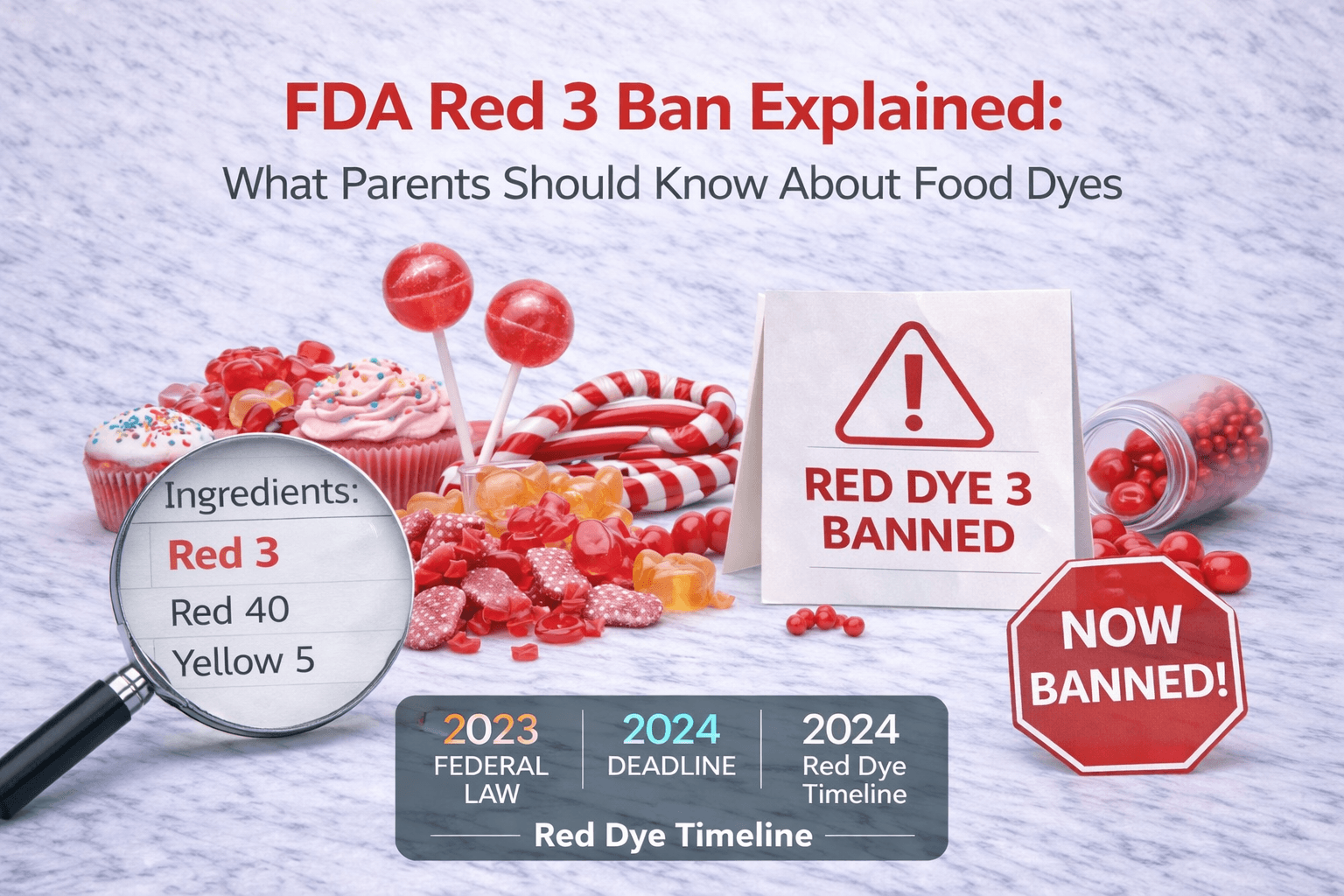
It’s a common misconception that the ban means Red 3 is already gone. Regulation moves slowly to allow for manufacturing transitions. The FDA formally revoked authorization on January 15, 2025, but food manufacturers have until January 15, 2027, to completely reformulate their products. Drug manufacturers have an additional year, with a deadline of January 18, 2028.
This means you will still see Red 3 on store shelves for the next couple of years. Products manufactured before the 2027 deadline can stay on the shelf until they are sold. The shift is already happening, but it is a multi-year phase-out rather than an overnight disappearance.
Which Products Contain Red 3?
Red 3 is most prevalent in products aimed at children or used for festive decorations. This includes candy corn, certain gummy candies, and cake decorations with red or pink icing. You’ll also find it in shelf-stable fruit products like maraschino cherries and fruit cocktails, as well as some strawberry-flavored beverages and frozen desserts.
To check your own pantry, look at the ingredient list for names like "FD&C Red No. 3," "Red 3," or "erythrosine." It may also appear as E127 on certain imported products. If a product has a neon-red or vibrant pink color, it’s worth a quick 10-second scan of the back label.
What About Other Food Dyes? Is Red 40 Next?
The ban on Red 3 doesn't automatically mean all food dyes are being targeted. Red 3 was pulled because of a specific animal study that triggered the Delaney Clause. However, other dyes like Red 40, Yellow 5, and Yellow 6 are under increasing scrutiny.
While these other dyes are currently legal in the US, the European Union already requires a warning label on products containing them, noting they may affect activity and attention in children. California also recently passed the Food Safety Act, which restricts these dyes in foods served in schools. While no federal ban is imminent for Red 40, the trend is clearly moving toward more transparency and natural alternatives.
How to Spot Food Dyes on Any Label
In the US, synthetic dyes must be listed by their certified name in the ingredient list. Look for terms like FD&C Red No. 40, FD&C Yellow No. 5, or FD&C Blue No. 1. If a product is marketed to kids and features bright, non-natural colors, there’s a high probability it contains at least one of these synthetic additives.
If you want to avoid the guesswork, digital tools can help. Nutika’s Toxicology Radar, for instance, automatically flags these dyes when you scan a label. This is especially helpful during the current transition period while Red 3 is being phased out, allowing you to choose safer alternatives without having to memorize a long list of chemical names.
Europe Bans Ingredients the US Allows—What's Actually Different?
You may have heard that Europe is "safer" because they ban ingredients we allow, but the reality is more nuanced. Often, the EU chooses to require warning labels rather than a total ban. For instance, Red 40 is still used in Europe—it just comes with a mandatory warning about its effects on children's behavior.
The difference isn't necessarily about who is "safer," but about the regulatory philosophy. The US generally uses a risk-based assessment, while the EU follows the "precautionary principle." No matter where you live, the best strategy is the same: stay informed, read the labels, and use technology to cut through the marketing noise when you're in the grocery aisle.
Frequently Asked Questions
Why was Red 3 banned by the FDA?
The FDA revoked authorization because of the Delaney Clause, which prohibits food additives shown to cause cancer in animal studies. High doses caused thyroid tumors in rats, triggering a legally required ban.
When will Red Dye 3 be removed from food?
Manufacturers have until January 15, 2027, to stop using Red 3 in food products. You may still see it on shelves until then as older inventory is sold off.
Is Red 40 also banned?
No, Red 40 remains legal in the US for now. However, it is subject to warning labels in Europe and has been restricted in California schools due to concerns over its effect on children's behavior.
Are food dyes bad for children?
Some research suggests a link between synthetic dyes and hyperactivity or attention issues in sensitive children. While the FDA currently considers them safe at current levels, the EU's warning label requirement reflects a more cautious approach.
How can I check if my food has Red 3?
Look at the ingredient list for "FD&C Red No. 3" or "erythrosine." It's most common in vibrant red candies, frostings, and certain medications.